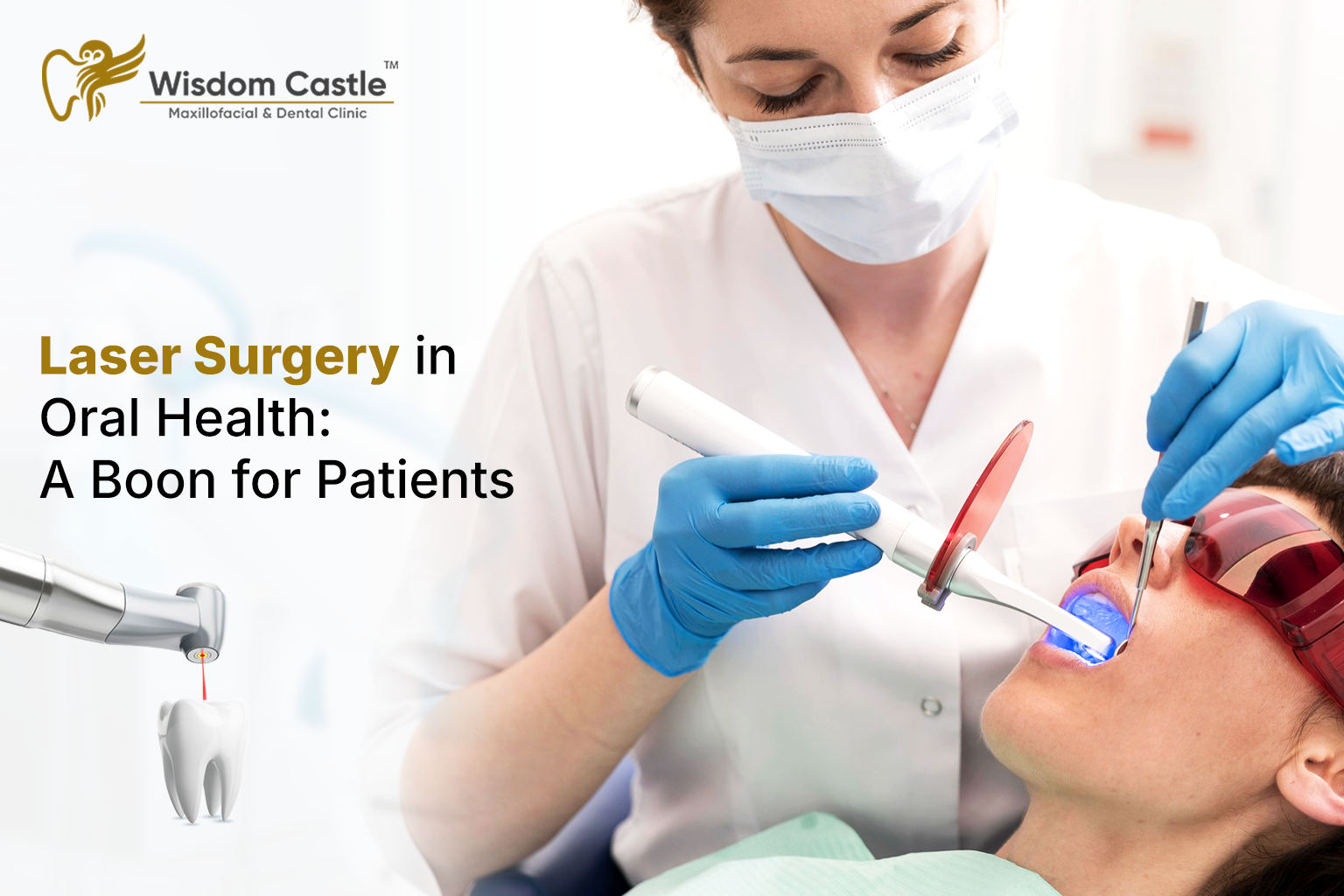
Laser surgery has revolutionised the field of oral surgery, offering patients a less invasive and more precise option for various dental and gum procedures. It uses focused light to perform surgeries on soft tissues (gums) and sometimes even hard tissues (teeth and bone), providing several benefits over traditional methods.
At Wisdom Castle Our procedures are performed using an advanced laser tool operating at a wavelength of Laser 980 nm for accurate results.
What is Laser Surgery in Oral Surgery?
LASER: Light Amplification by Stimulated Emission of Radiation
Laser surgery involves the use of laser technology to treat issues in the mouth, gums, teeth, and jaw. Unlike traditional surgery, which requires blades and stitches, laser surgery uses focused light beams to remove or reshape tissue. This technology can be used for a wide range of oral health problems, such as gum disease treatment and even cosmetic procedures.
Laser surgery can be done in both soft tissue surgeries (like gums) and hard tissue surgeries (like teeth or bone). It’s most commonly used for:
Gum treatments: Removing infected or damaged gum tissue.
Biopsy and tumor removal: In some cases, lasers can remove abnormal tissues.
Teeth whitening: Used in conjunction with bleaching agents to enhance results.
Benefits of Laser Surgery in Oral Procedures
Less Invasive: Traditional surgery often requires cutting and stitching, whereas lasers can work with minimal disruption to the surrounding tissues.
Reduced Pain and Swelling: The focused laser light cauterizes the tissue as it works, leading to less bleeding, swelling, and discomfort.
Quicker Recovery: Due to the precision and minimal tissue damage, patients typically experience faster healing compared to traditional surgery methods.
Precision and Accuracy: Laser technology allows the surgeon to work with extreme precision, reducing the risk of damaging healthy tissue.
Minimal Bleeding: Laser surgery can also coagulate blood vessels as it cuts, leading to minimal bleeding, which helps in quicker recovery.
Improved Post-Operative Comfort: The reduced need for stitches and the lower risk of infection contribute to a more comfortable post-surgery experience.
Common Laser Surgery Procedures in Oral Surgery Laser Gum Treatment: Used to remove infected gum tissue in cases of gum disease or reshaping the gums for cosmetic purposes.
Laser Wisdom Tooth Removal: In certain cases, lasers can be used to remove impacted wisdom teeth, making the process quicker and less painful.
Biopsy or Tumor Removal: Oral surgeons can use lasers to carefully remove tumors or abnormal tissue from the mouth or throat.
Cosmetic Procedures: Some cosmetic dental treatments, like reshaping the gums for a better smile, are made easier and less invasive with laser technology.
Post-Operative Care for Laser Surgery
After laser surgery, you still need to follow proper recovery steps to ensure a smooth healing process:
Follow your surgeon’s instructions carefully: Adhere to prescribed medications and aftercare instructions to minimize complications.
Manage swelling and discomfort: Use prescribed pain relievers, ice packs, and follow your surgeon’s advice on minimizing swelling.
Stay hydrated and maintain proper nutrition: Soft foods and adequate hydration will support your body in healing. Avoid hot or cold foods that might irritate the surgical site.
Protect the treated area: Keep the surgical area clean and follow any precautions to prevent infection or damage to the treated tissues.
Avoid certain activities: You may be advised not to smoke, drink through a straw, or perform strenuous activities during the early stages of recovery.